
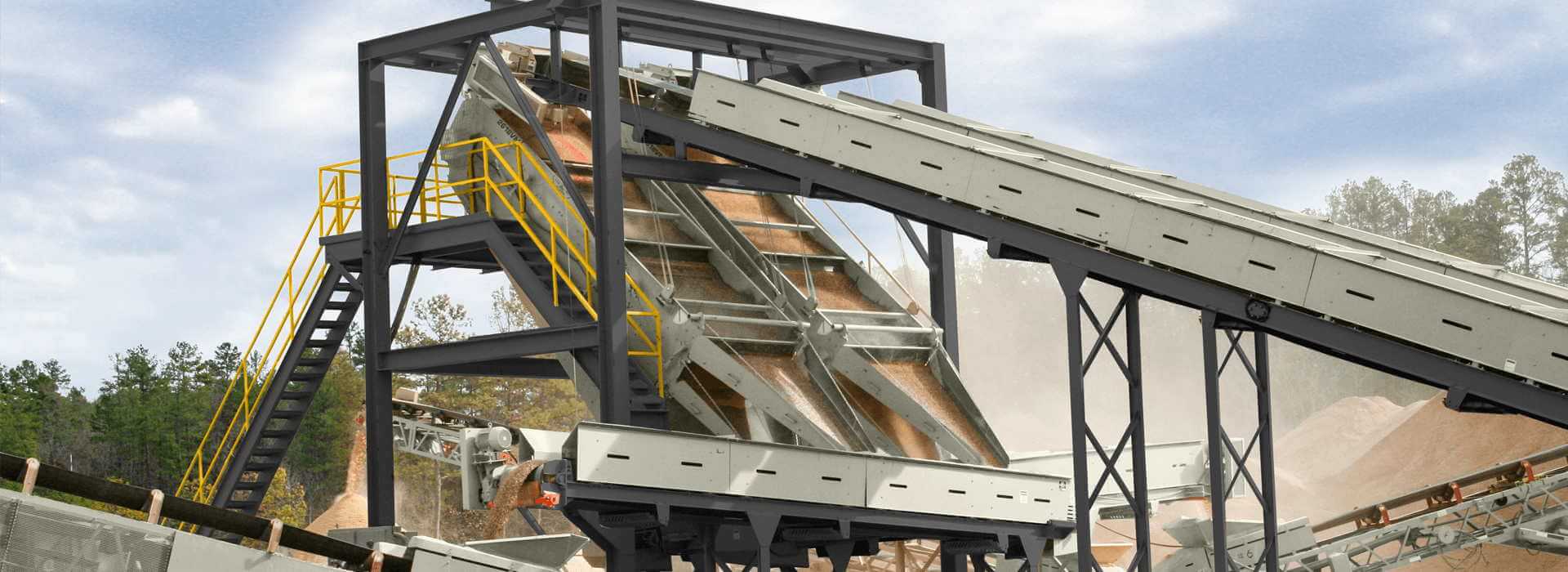
High Frequency Screens
Astec high frequency screens utilize high-speed vibration, from 3600 – 4200 RPM, directly induced to the screen media, allowing for increased stratification and material separation.
Overview
Astec high frequency screens utilize high-speed vibration, from 3600 – 4200 RPM, directly induced to the screen media, allowing for increased stratification and material separation.
The directly-induced vibration improves screen efficiency at high production rates compared to conventional screens. A unique rotary tensioning system provides the quickest screen media changes in the market, up to 50 percent faster than competitive models. Our high frequency screens offer ideal gradation control for reclaiming fines in both wet and dry applications.
Features
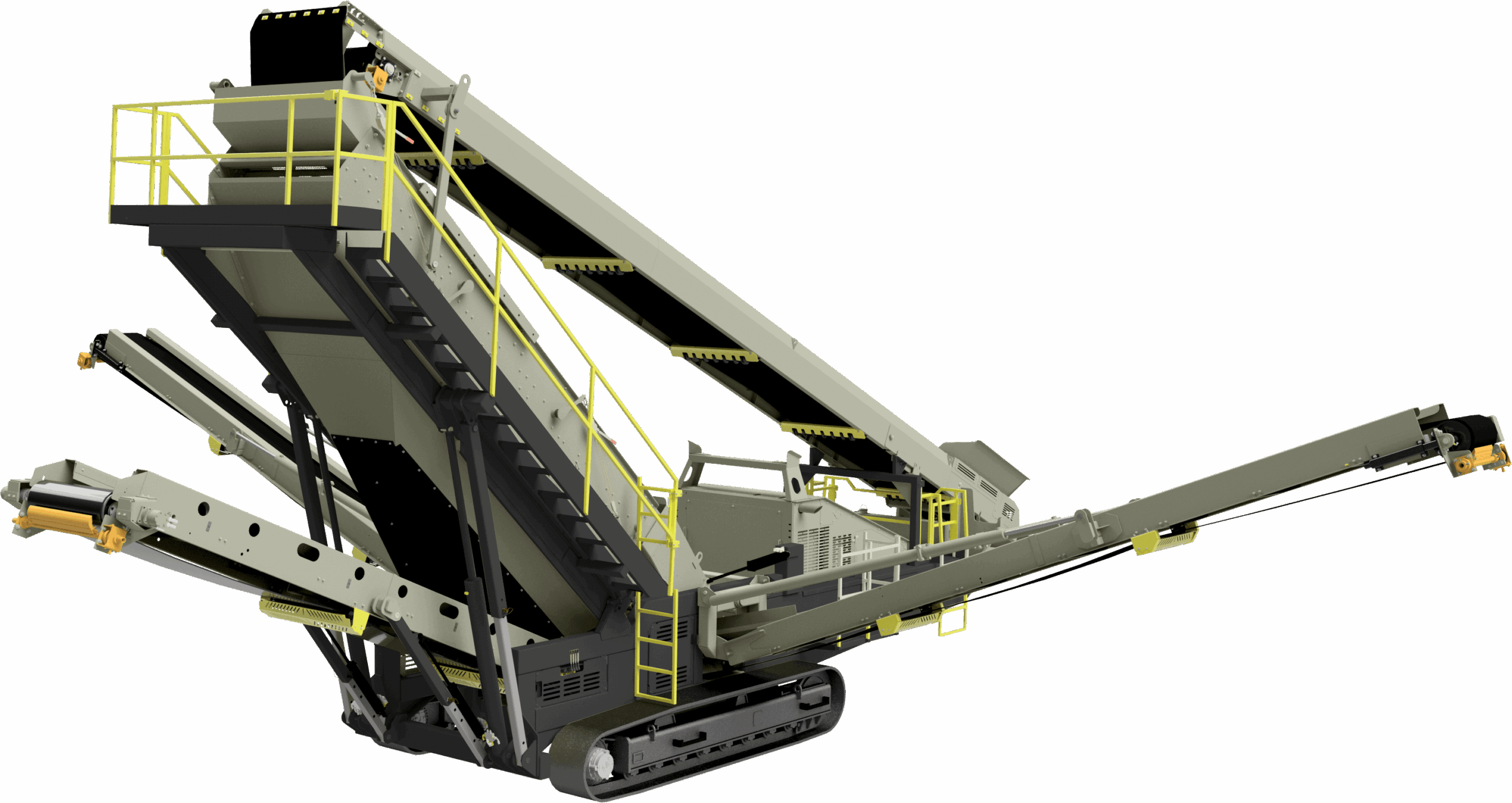
Directly-induced Vibration
- High-speed vibration (3,600 – 4,200 RPM)
- Applied directly to screen media for increasedstratificationand separation
- Improve screening efficiency compared to conventional screens
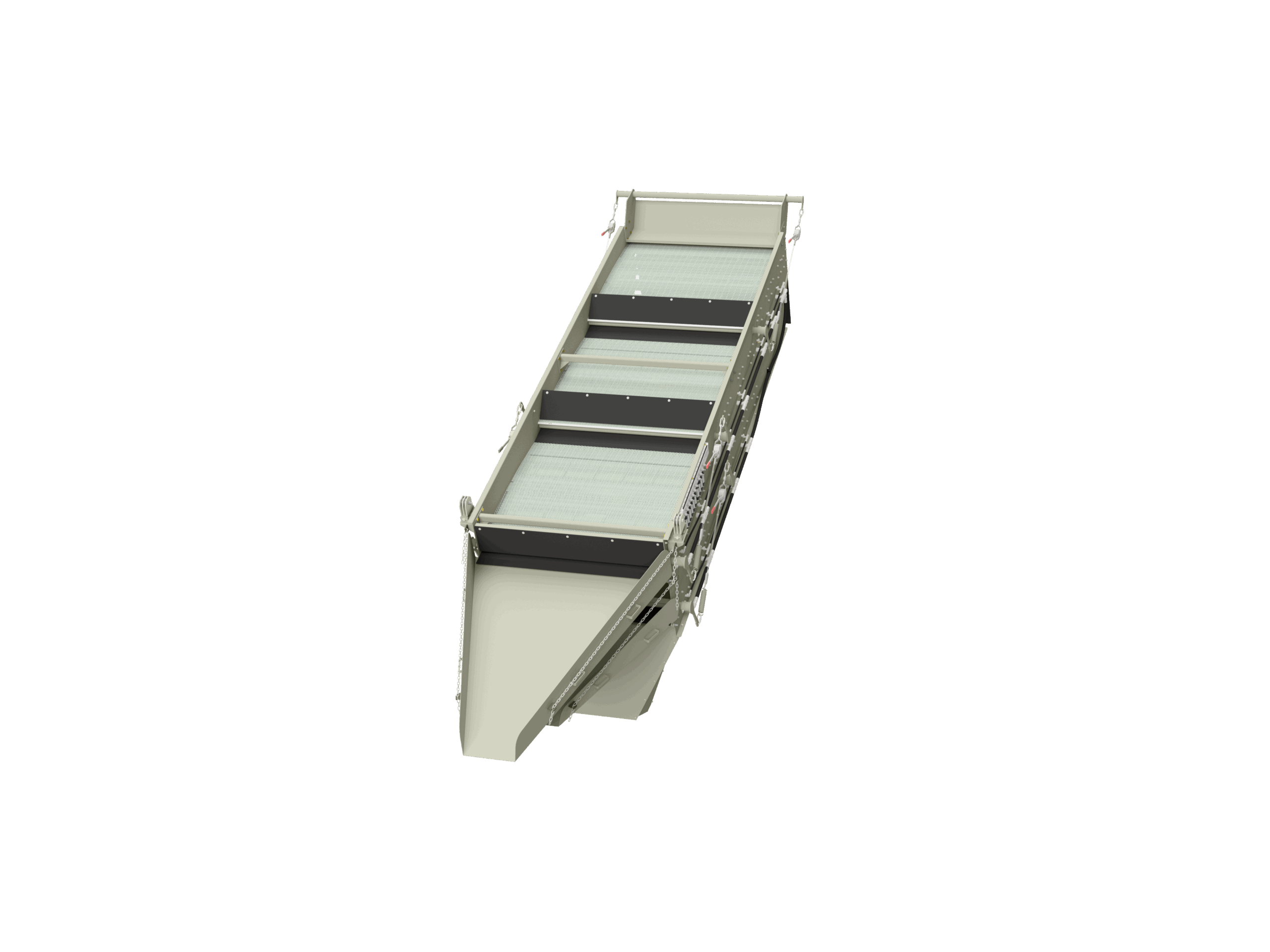
High Frequency Screen Operation
½” -30M material separations 38°- 43° operating angle Maximum stroke of .094”/ 2.38mm Speed range from 3,600 – 4,200 RPM
Rotary Tensioning System
- Provides quick screen media changes
- Easy replacement of each section
- Less downtime, increased operation time
Electric/hydraulic Vibrators
- All decks driven by variable-speed hydraulic vibrators
- Optimal screenefficiency andproduction
- Electric vibrators (3,600 RPM) available upon request
High Frequency Screen Applications
- Crushed stone, sand and gravel
- Recycled asphalt
- Coal
- Fly ash
- Slag
- Coke


Where to Buy
Find an Astec Dealer Near You
Dedicated Support
Innovation You Can Count On, Support You Can Trust.
When you choose Astec, you’re never on your own. Our team is ready to answer your questions, solve problems, and keep your equipment running smoothly—today, tomorrow, and for years to come.
Applications
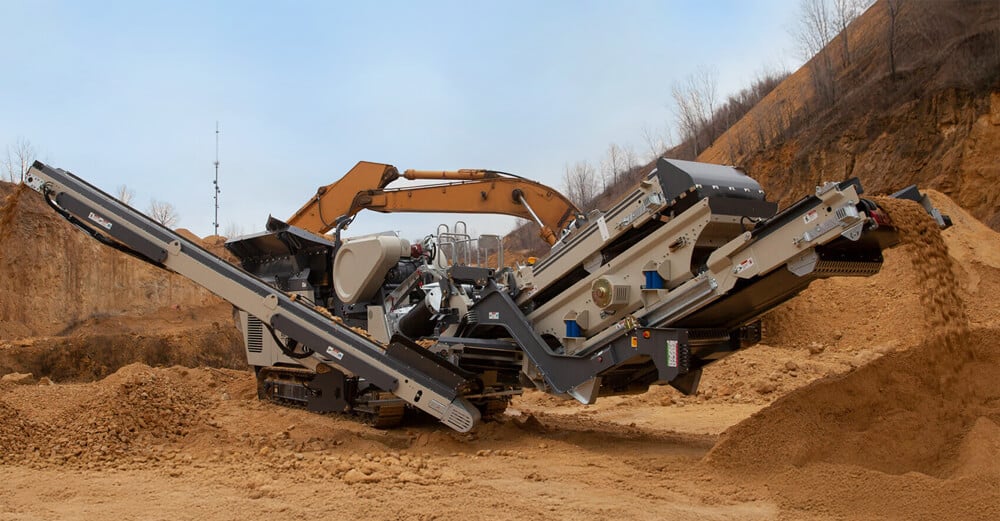
Aggregates
There are two main classes of aggregates: natural and manufactured.
Learn More about Aggregates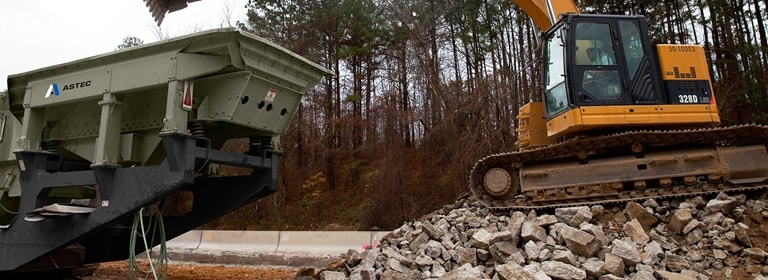
Concrete Recycling
Concrete is one of the most recycled materials in the world and can be repurposed several times over.
Learn More about Concrete Recycling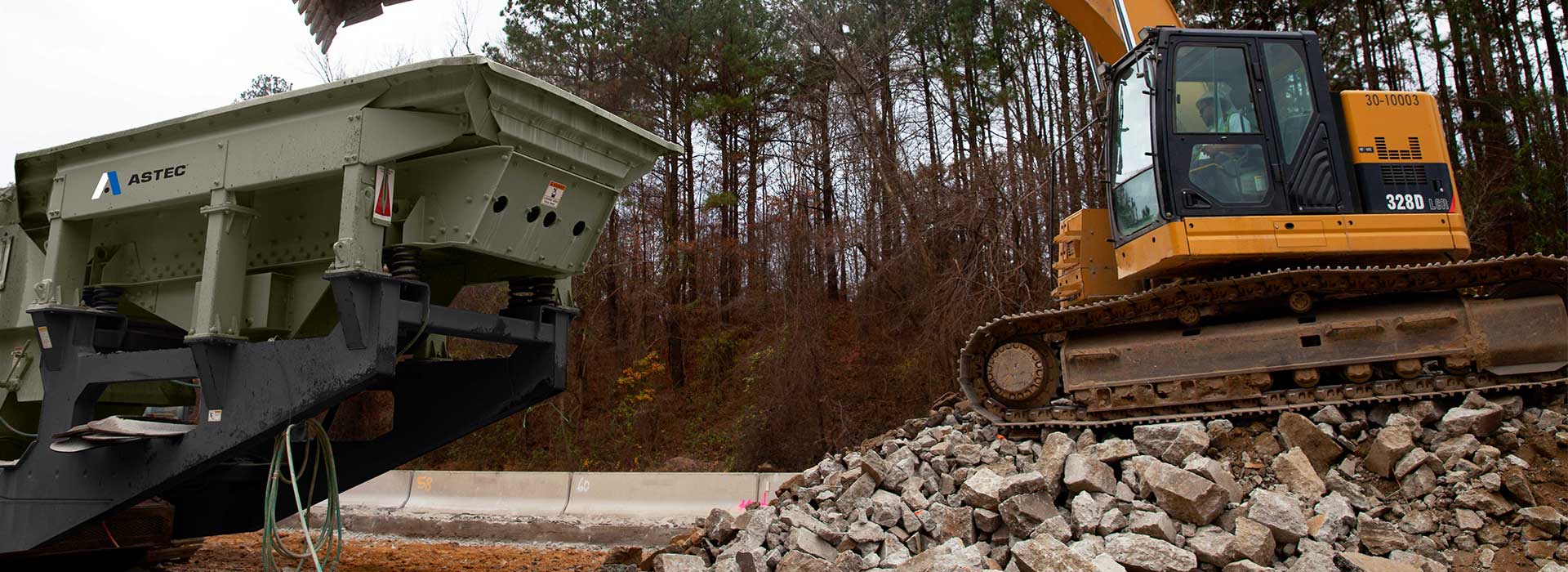
Construction
Construction projects today depend on an available supply of quality concrete mix.
Learn More about Construction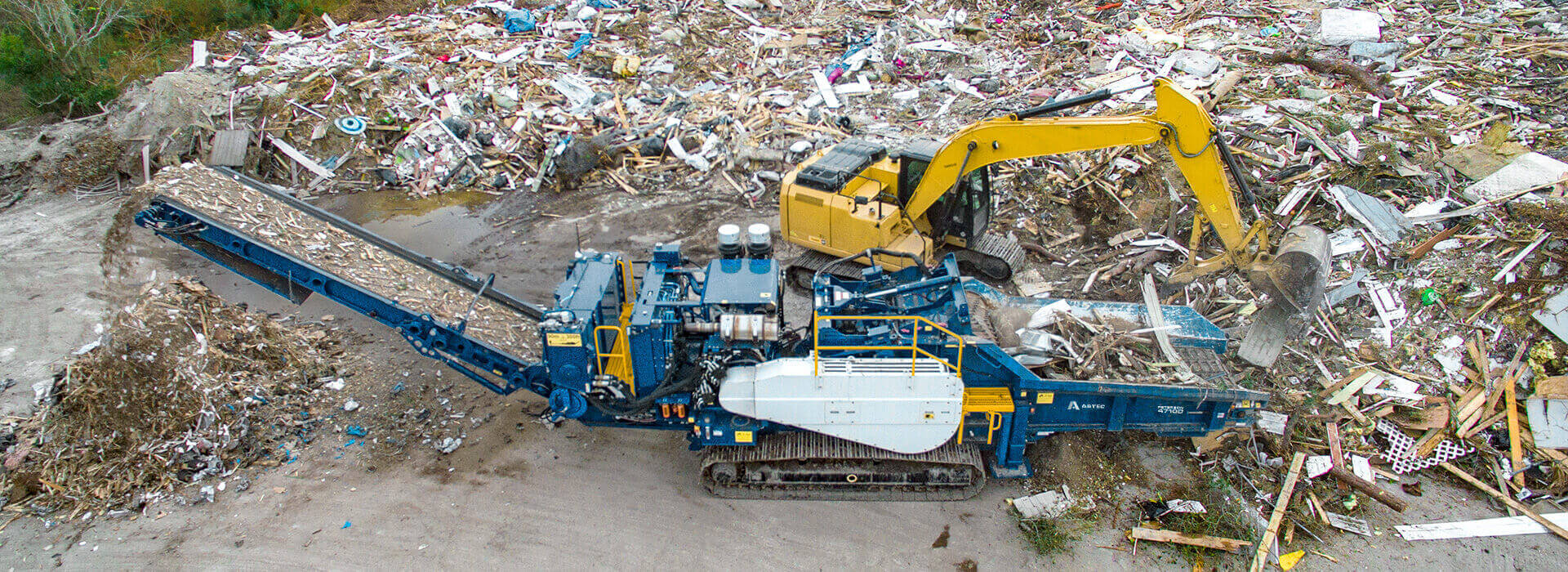
Construction & Demolition Recycling
Construction & Demolition Recycling materials include wood, cardboard, gypsum, plastic, metal, wire, roofing shingles, asphalt and concrete.
Learn More about Construction & Demolition Recycling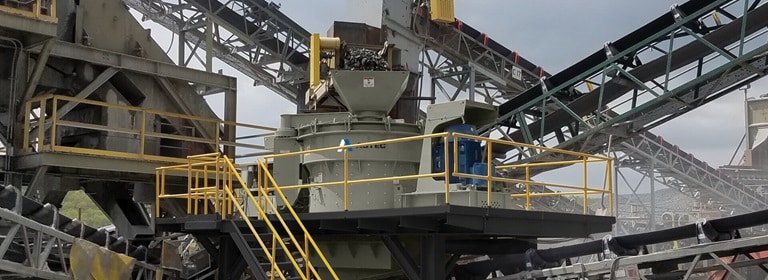
Construction Aggregates
Construction aggregate is typically medium or coarse materials like granite, limestone or trap rock, sand, gravel, slag or recycled concrete.
Learn More about Construction Aggregates
Crushed Stone
Crushed stone is a versatile product that can be used in a wide range of applications from construction to road building and even agriculture.
Learn More about Crushed Stone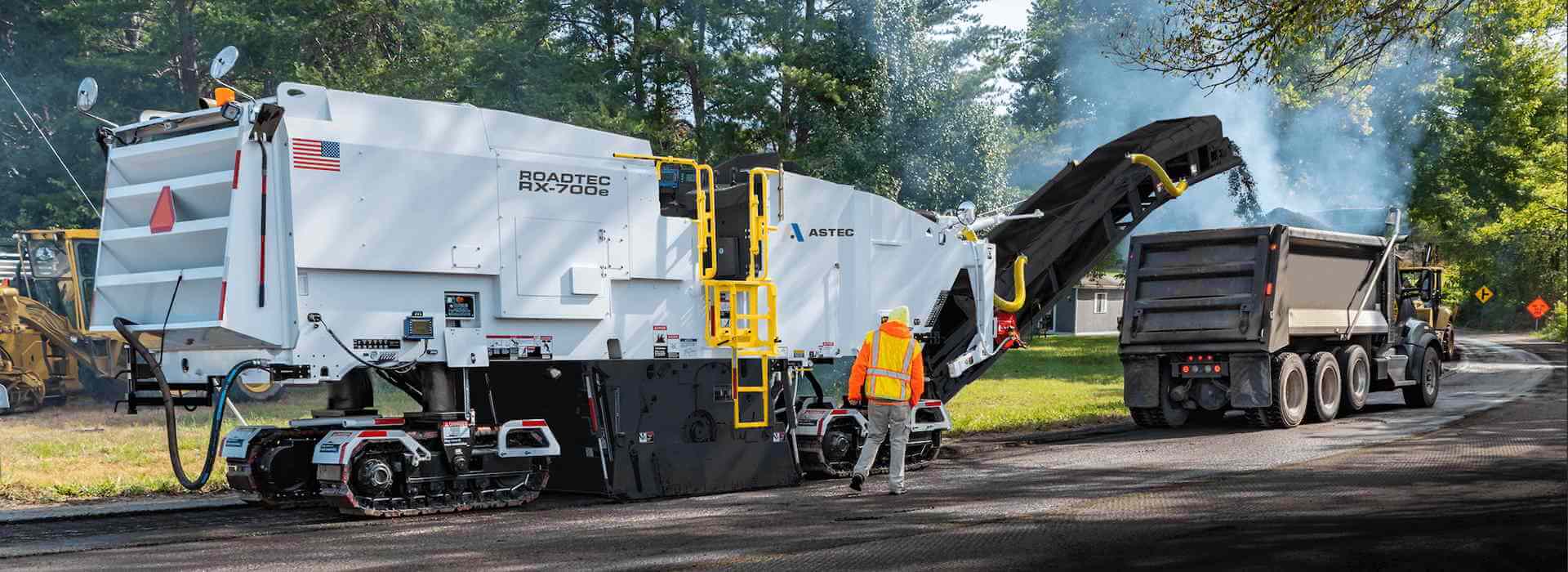
Recycled Asphalt Pavement
Recycled asphalt pavement (RAP) is asphalt paving material recovered from old road beds either by milling or excavation.
Learn More about Recycled Asphalt Pavement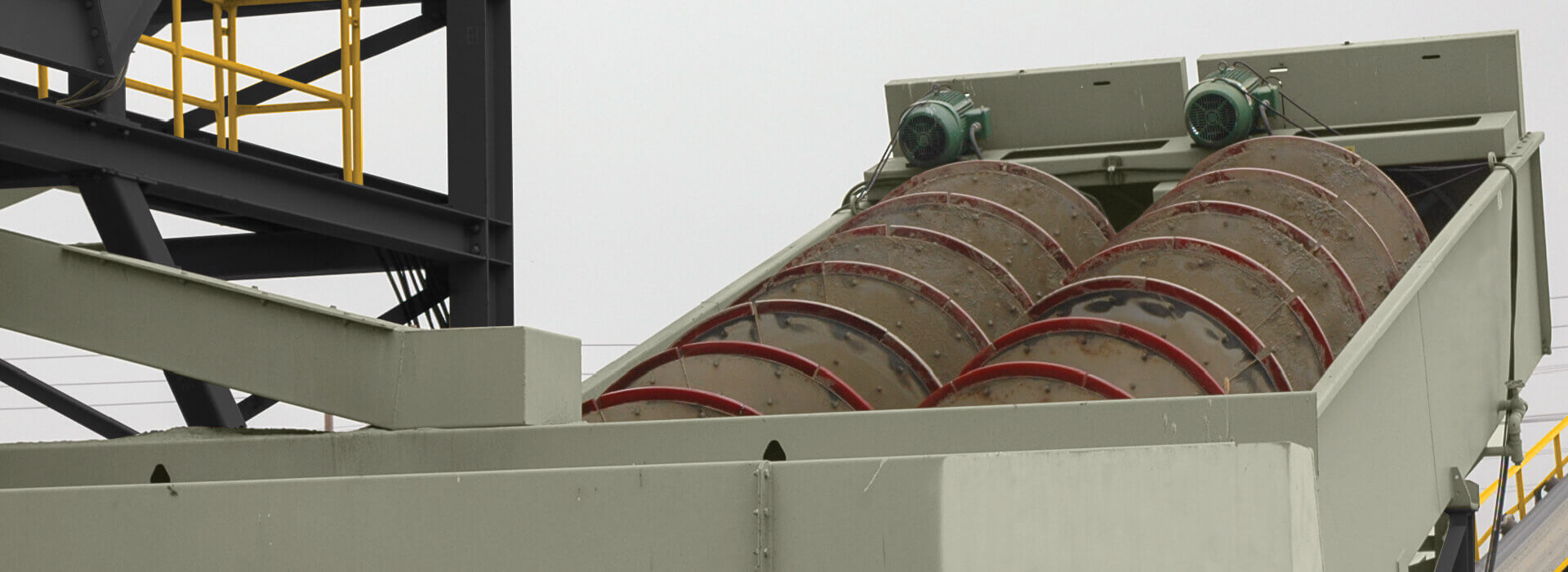
Sand & Gravel
Aggregates, when gathered, may contain clays, silts and other deleterious material that needs to be processed out for commercial-grade products.
Learn More about Sand & Gravel